Full & Partial
Electrical Rewires
Get in Touch
Safe, modern rewiring services designed to upgrade outdated electrical systems and improve reliability.
Message Us
How it Works
Rewiring replaces outdated or unsafe electrical wiring with modern, compliant installations that meet current safety standards.
The process begins with a full inspection of the existing system to assess condition, load capacity, and potential hazards. A clear plan is then created to upgrade wiring, sockets, lighting circuits, and consumer units where required.
The process begins with a full inspection of the existing system to assess condition, load capacity, and potential hazards. A clear plan is then created to upgrade wiring, sockets, lighting circuits, and consumer units where required.
Modern Safety
Updated wiring and protection systems for safer homes and buildings.
Future Proofing
Designed to support modern appliances and higher electrical demand.
Certified Work
Installed and tested to recognised industry standards.
When is a Rewire Needed?
Rewires are commonly recommended for older properties, renovations, or systems showing signs of wear or insufficient capacity.
Common indicators include outdated fuse boards, fabric or rubber insulation, frequent tripping, overloaded circuits, or insufficient socket availability. A professional inspection helps determine whether a full or partial rewire is the best solution.
Full vs Partial Rewires
The scope of work depends on the condition of existing wiring and the goals of the project.
Each project is tailored to the property layout, condition, and planned improvements.
Full Rewire
Complete replacement of all wiring, circuits, and accessories.
Partial Rewire
Upgrading specific areas such as kitchens, extensions, or older circuits.
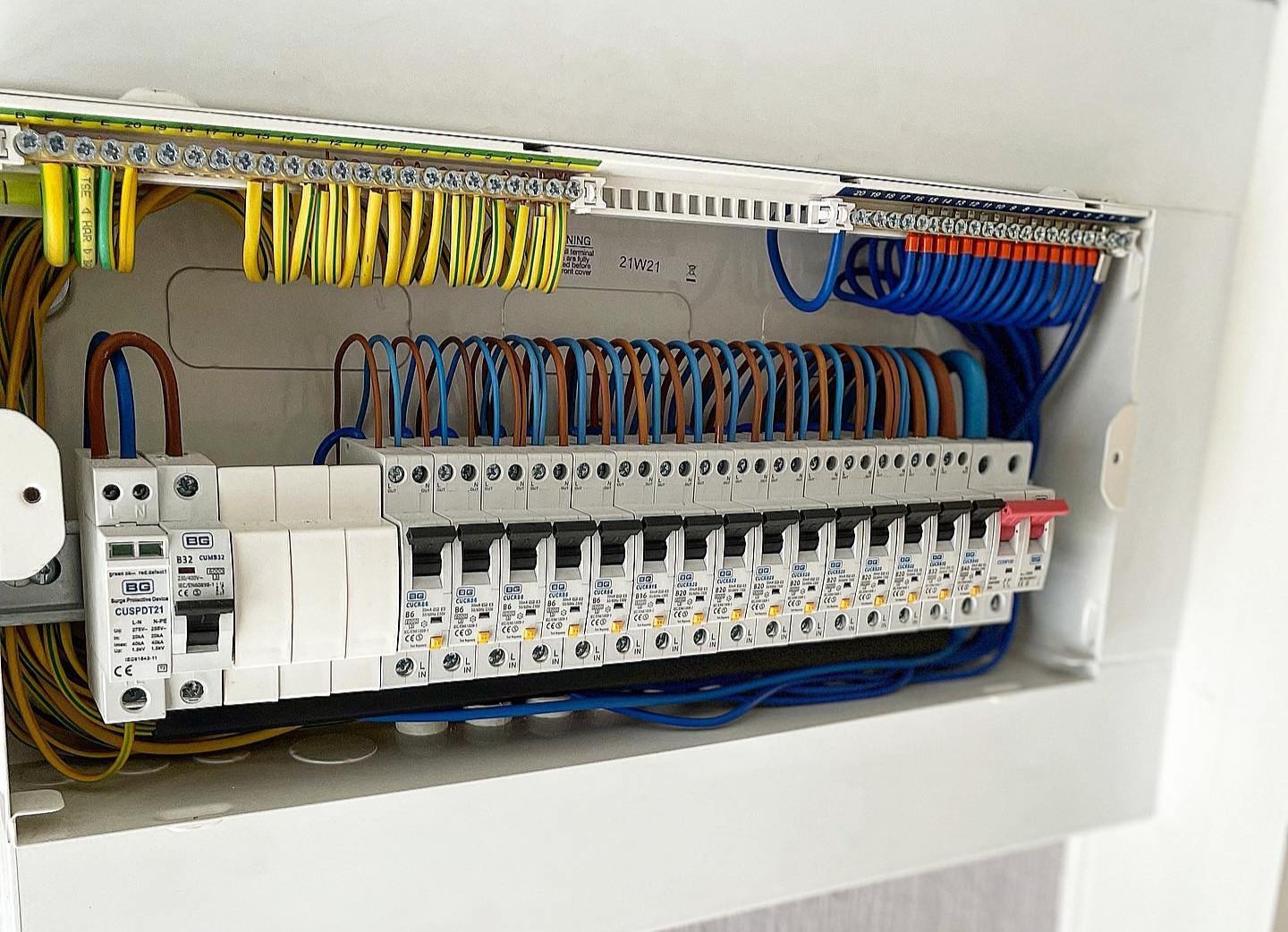
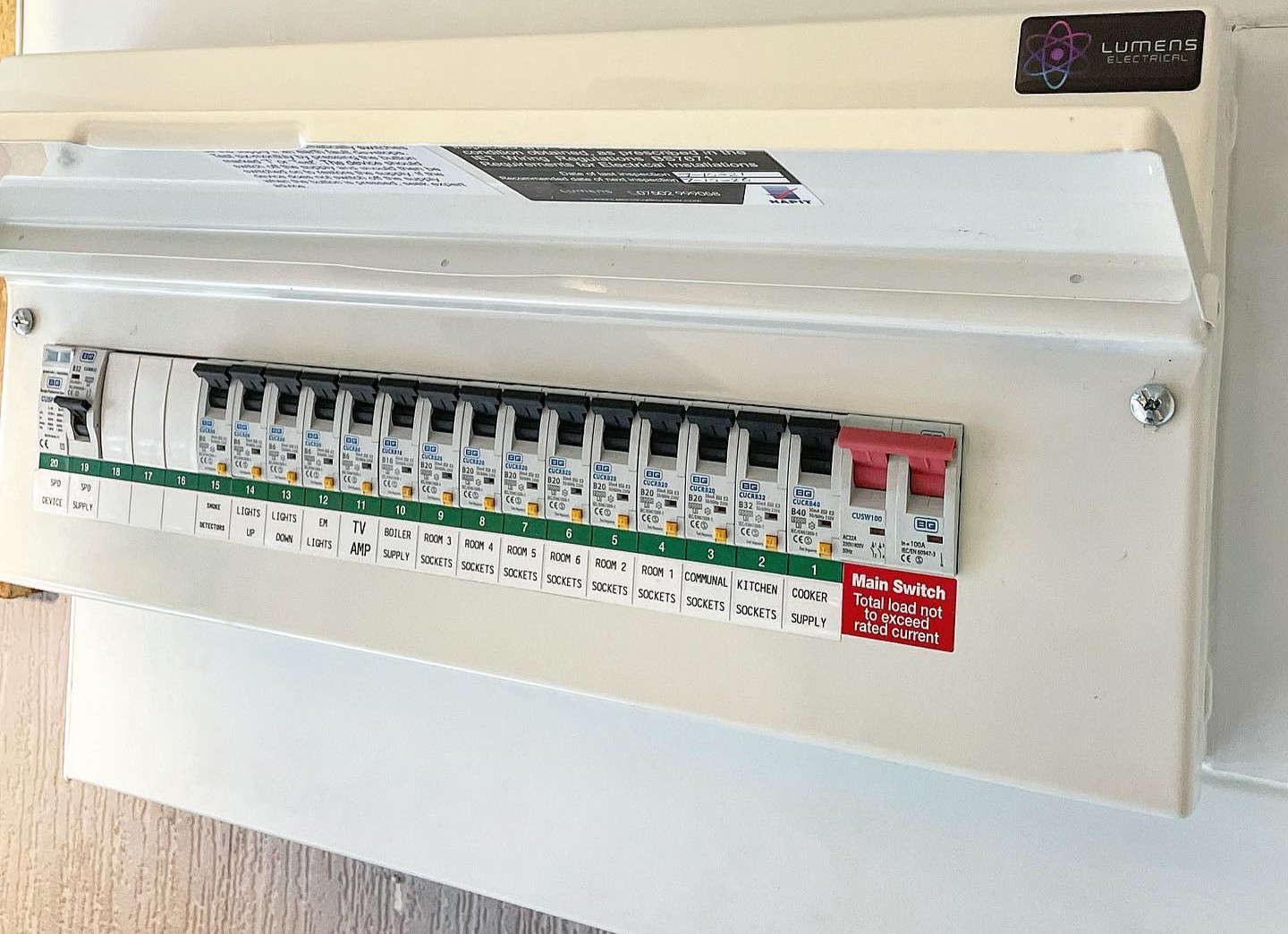
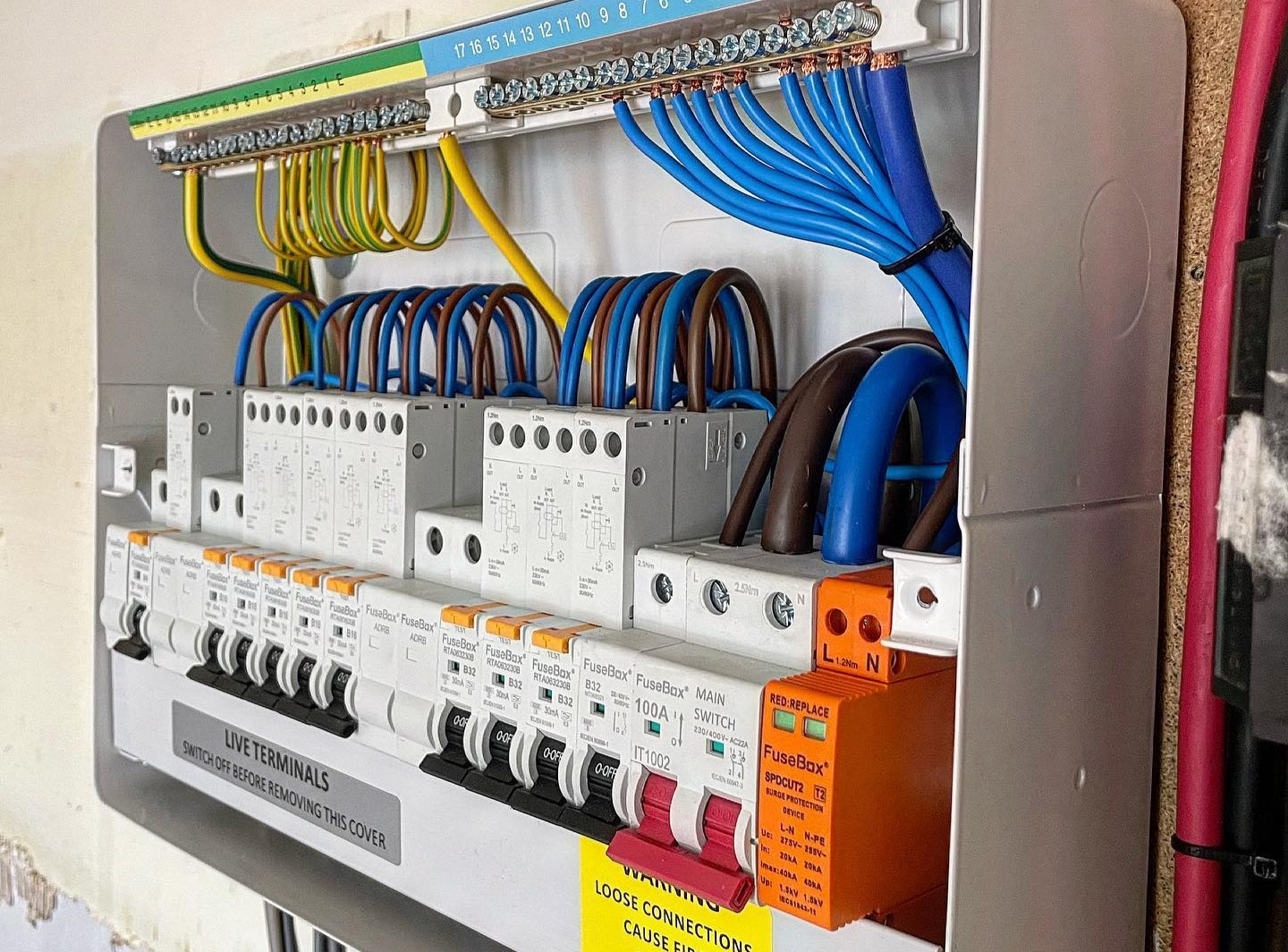
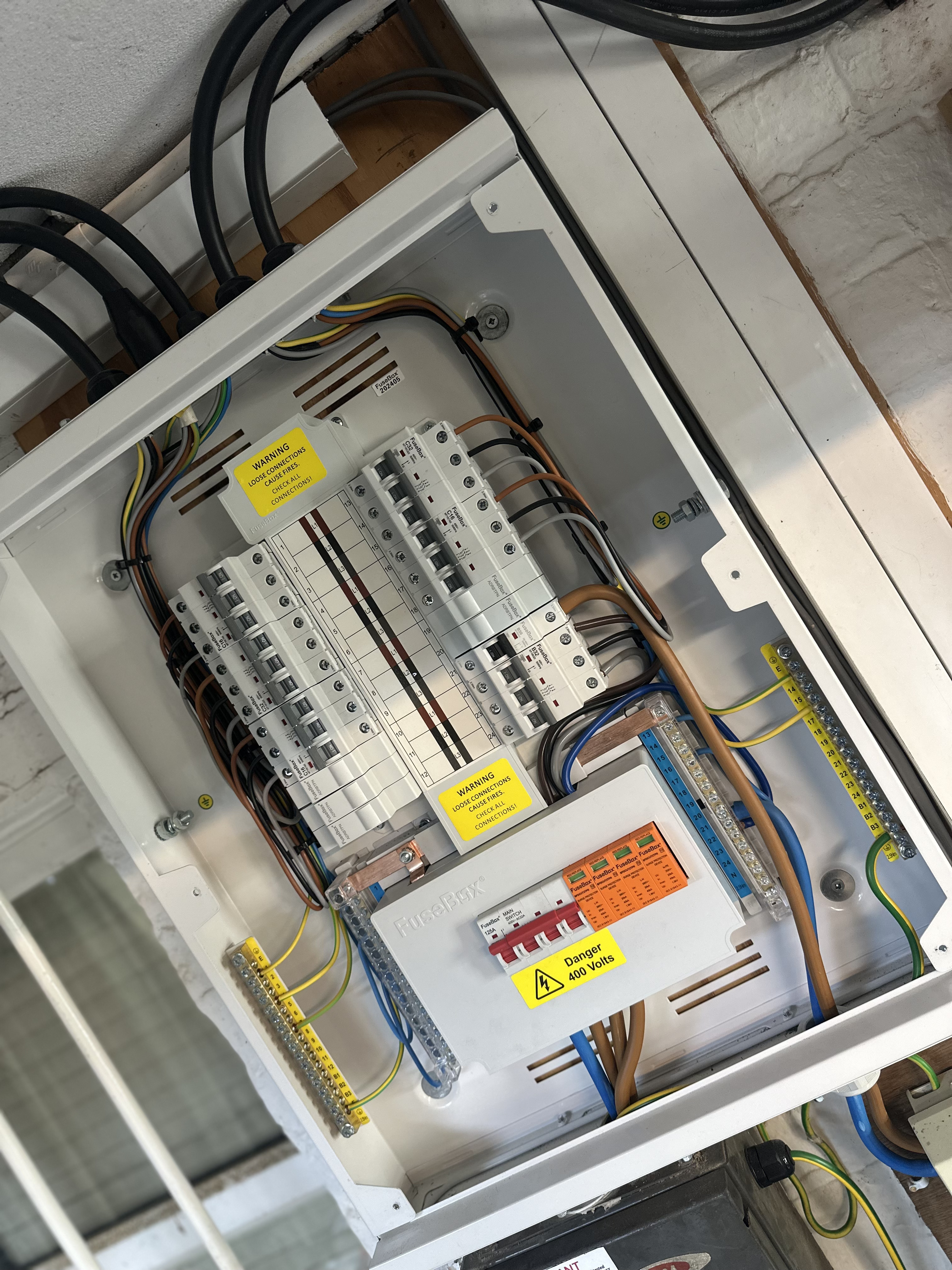
Consumer Unit Upgrade
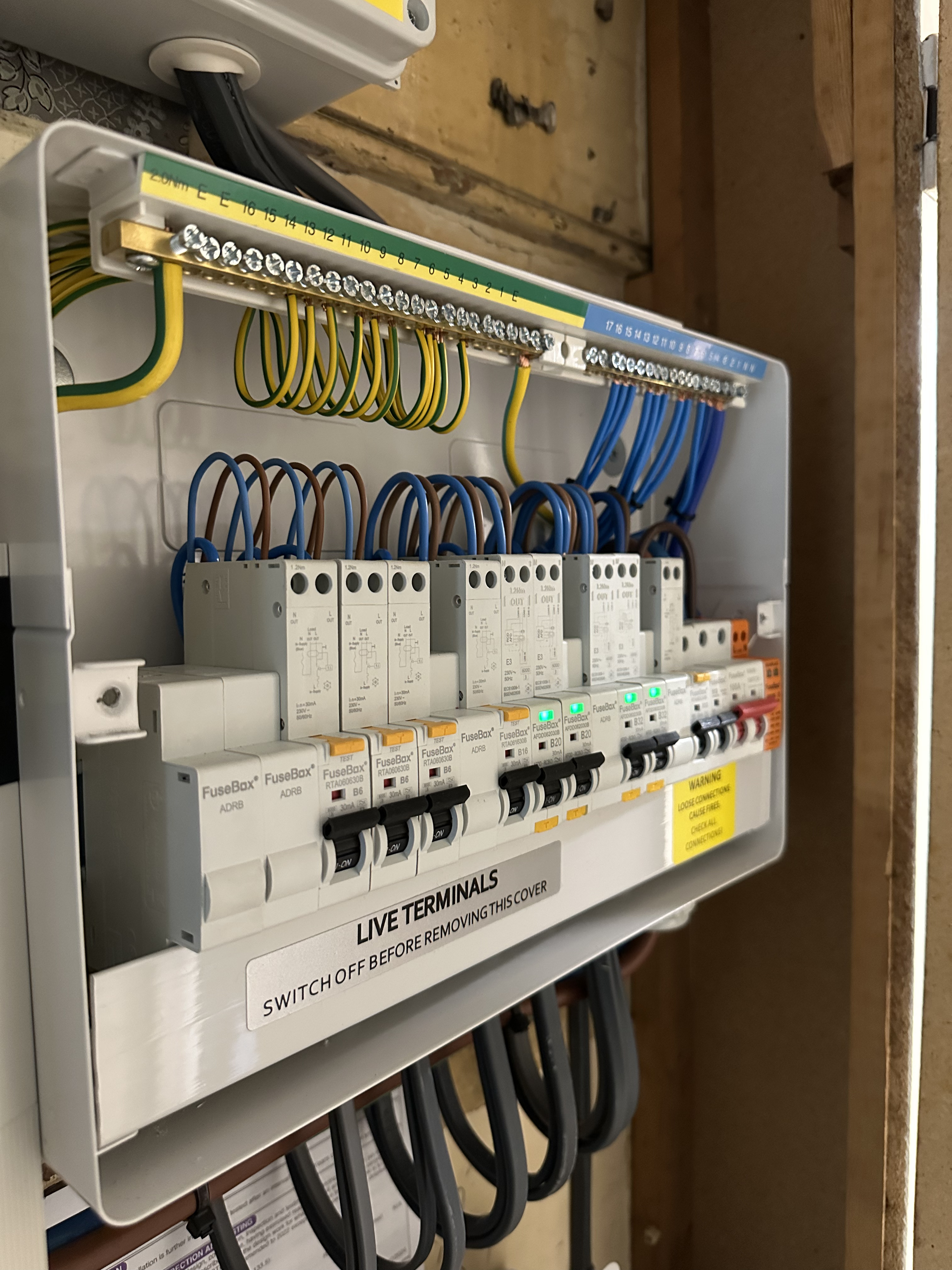
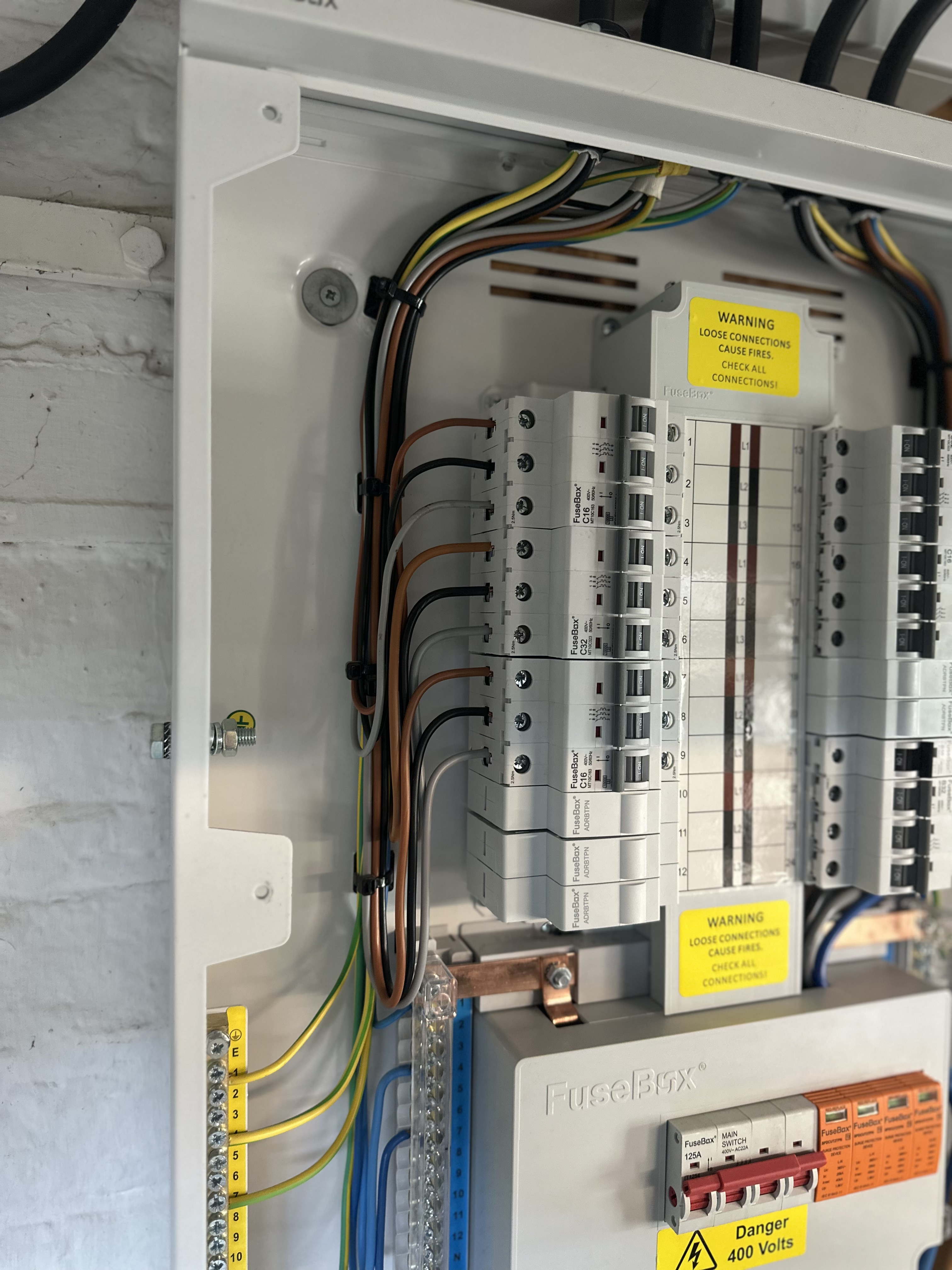
Modern boards with RCD/RCBO protection for improved safety.
Each project is tailored to the property layout, condition, and planned improvements.
Minimising Disruption
Rewiring can involve lifting floorboards, accessing walls, and temporary power shutdowns. Work is carefully planned to minimise disruption and keep projects moving efficiently.
Where possible, installations are coordinated with renovations or refurbishment work to reduce repeat labour and overall project time.
System Design Matters
A successful rewire is not just about replacing cables — it’s about designing a system that works for how the property is actually used.
Key considerations include:
Careful planning ensures the new system remains practical and reliable long-term.
Key considerations include:
Layout
Socket placement, lighting design, and room functionality.
Usage
Modern appliances, home offices, and entertainment systems.
Future Needs
EV chargers, extensions, and smart home upgrades.
Careful planning ensures the new system remains practical and reliable long-term.
Compliance
All rewiring work is completed in line with current regulations and recognised industry standards.
This includes:
All installations prioritise safety, reliability, and long-term performance.
This includes:
Compliance with BS 7671 (IET Wiring Regulations)
Full testing, inspection, and certification
Correct circuit protection, isolation, and labelling
All installations prioritise safety, reliability, and long-term performance.
Frequently Asked Questions
How long does a rewire take?
Timeframes vary depending on property size and complexity, but most domestic rewires take between several days and a few weeks.
Will I need to move out during a rewire?
Not always. Some properties remain occupied, though temporary disruption and power shutdowns are expected.
Will walls need to be repaired afterwards?
Access is required for new cabling, but efforts are made to minimise damage. Final decorating is usually completed after electrical work is finished.
Can rewiring be done during renovations?
Yes. Renovation projects are often the best time to complete a full rewire efficiently.
Will I receive certification?
Yes. All rewiring work is fully tested and certified in accordance with current regulations.
Is a rewire worth it for older properties?
Yes. Upgrading outdated wiring improves safety, reliability, and capacity for modern electrical use.
Our Approach
We deliver rewiring projects with careful planning, clear communication, and professional workmanship from start to finish.
Installations are clean, compliant, and built for long-term safety — giving you confidence that your electrical system is ready for modern living.